
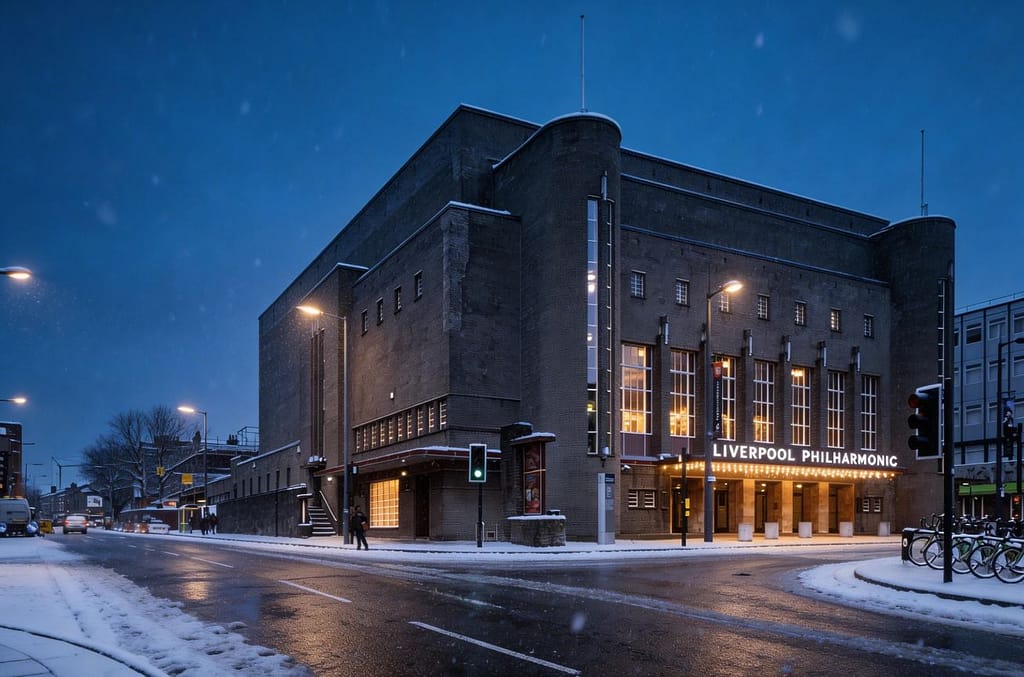
The Philharmonic Hall stands on Hope Street in Liverpool. Opened in 1849, it is a leading concert venue. Haunted Philharmonic Hall centres on the auditorium and backstage areas, where Victorian design and cultural history create subtle echoes.
Philharmonic Hall History and Design The Philharmonic Hall was built for the Royal Liverpool Philharmonic Society. The neoclassical structure features a grand foyer, ornate ceilings and excellent acoustics. It survived wartime damage and renovations, hosting world-class performances.
The hall’s interior includes plush seating and historic plaques. Its position near cultural landmarks adds to its prestige.
Reported Presences and Folklore Haunted Philharmonic Hall includes sightings of shadowy patrons in seats after hours. These figures tie to former concertgoers or musicians. Witnesses describe shapes fading in the balcony.
Phantom music echoes in empty halls. Cold spots form backstage. Footsteps sound in corridors. Accounts remain consistent among staff and performers, grounded in the hall’s documented past.
Streets and Surroundings Haunted Philharmonic Hall extends to Hope Street and nearby paths. Misty forms appear at dusk, possibly linked to Victorian crowds. Local folklore mentions restless spirits from the area’s cultural history, adding understated depth to roads.
Stories stay factual and measured.
Join DeadLive for Northwest Ghost Hunts DeadLive organises ghost hunts at comparable venues across the region. Visit Mayer Hall in Bebington for manor investigations Lark Lane Old Police Station in Liverpool for historic confinement tales Coffee House in Wavertree for Victorian echoes or Vale House in New Brighton for seaside activity. Book tickets to join guided sessions and investigate reported phenomena in professional settings.
The Philharmonic preserves Liverpool’s musical heritage where history lingers close.
DeadLive, Taking You Where the Haunting Is Happening