
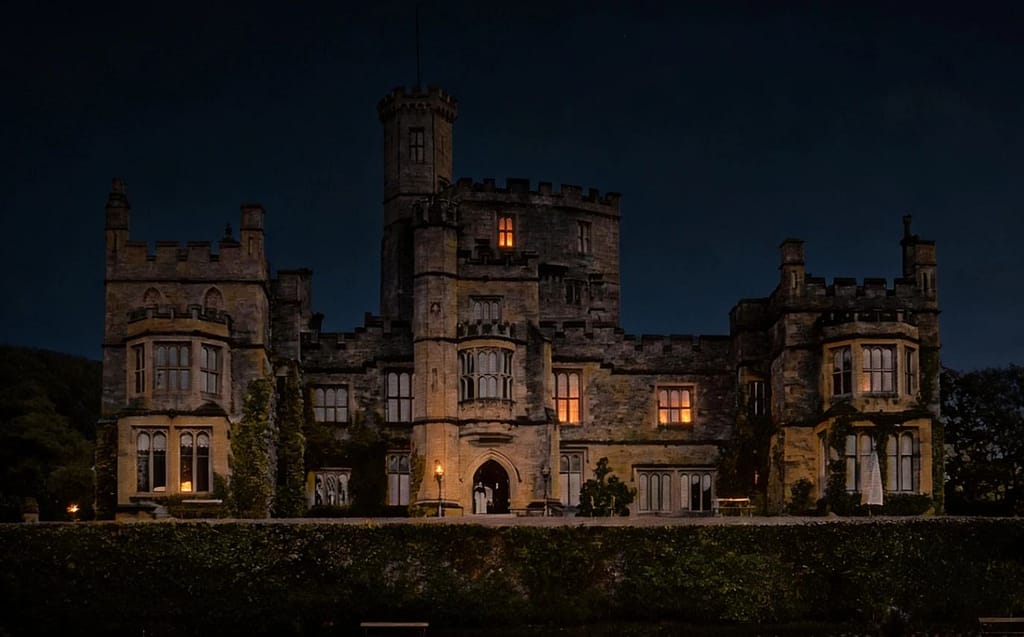
Hornby sits quietly in Lancashire’s Lune Valley near Lancaster. This small village carries a weight of history through its ancient castle and winding lanes, making it a subtle yet compelling entry in Northwest England’s haunted places.
Hornby Castle: Medieval Stronghold and Spectral Presence Hornby Castle began in the 13th century as a fortified manor under the Montbegon family. Later owners, including the Nevilles and Stanleys, saw it through sieges in the Wars of the Roses. Today, parts stand ruined or private, but the stone keep and towers retain their imposing form.
The Black Lady remains the central figure in local reports. Described as a dark-robed woman, she appears in upper corridors or near the old chapel, vanishing quickly. Her presence ties to a possible 16th-century tragedy—betrayal or untimely death within the family. Footsteps echo on empty stairs, and doors move without wind, noted by visitors over many years.
Lanes and Village Edges: Quiet Unease Haunted Hornby reaches beyond the castle into narrow lanes. Shadowy shapes appear at dusk, linked to Civil War echoes or older unsettled burials. Folklore speaks of restless spirits tied to oaths or executions, adding to the sense of watchfulness along rural paths.
These accounts stay consistent and understated, shared by locals rather than sensationalised.
Step Into the Unknown with DeadLive DeadLive runs ghost hunts at comparable Northwest sites. Join us at Mayer Hall in Bebington for manor investigations, Lark Lane Old Police Station in Liverpool for historic confinement stories, or Old Linacre in Bootle for pub-linked activity. Book tickets to experience reported phenomena in guided, professional settings—uncover your own insights.
Hornby preserves Lancashire’s layered heritage, where the past lingers quietly.
DeadLive, Taking You Where the Haunting Is Happening