
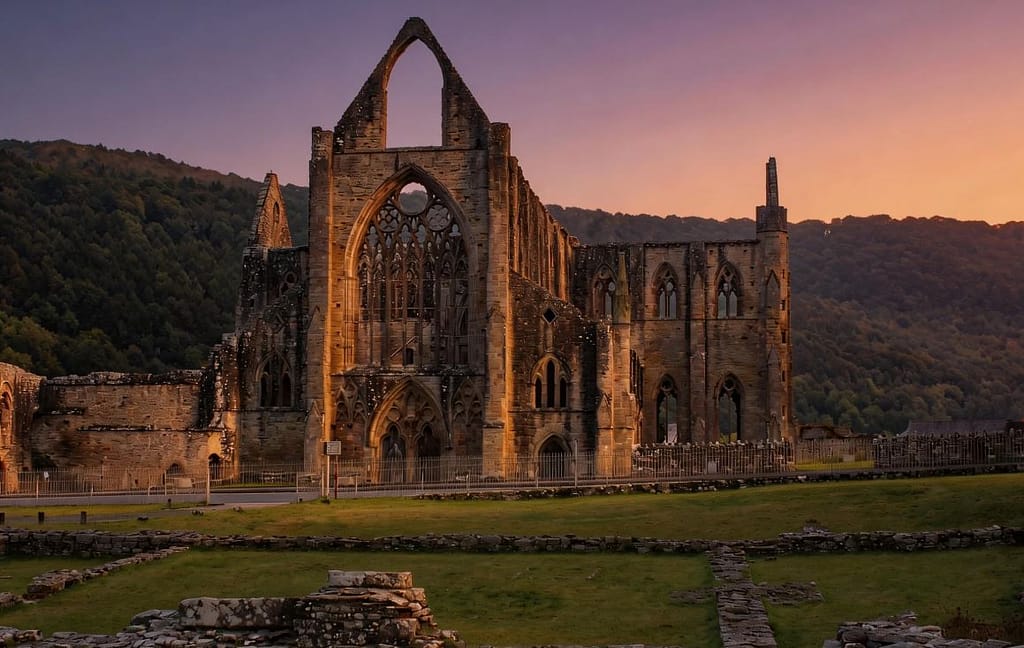
Tintern is a small village in Monmouthshire, Wales. Nestled in the Wye Valley, it features one of Britain’s most evocative monastic ruins. Haunted Tintern centres on Tintern Abbey and its grounds, where centuries of religious life and dissolution leave subtle traces.
Tintern Abbey History and Ruins Tintern Abbey was founded in 1131 as a Cistercian monastery. It grew into a major religious house with grand architecture including the nave, cloisters and chapter house. The abbey thrived until dissolution under Henry VIII in 1536, after which it fell into ruin.
The surviving stone arches, windows and walls stand impressively today. Managed by Cadw, the site draws visitors for its peaceful beauty and layered past.
Reported Presences and Folklore Haunted Tintern includes sightings of hooded monk figures gliding through cloisters or the nave. These apparitions tie to the abbey’s active monastic community or unrest from the Reformation.
Faint chanting echoes occur at night and cold spots form in the chapter house. Misty shapes appear near river paths, often described as calm. Accounts stay consistent among visitors and locals, grounded in the abbey’s documented history.
Grounds Paths and Valley Haunted Tintern extends to the abbey grounds and nearby paths. Wandering forms emerge in mist, possibly linked to monks or travellers. Local folklore mentions restless spirits from the site’s religious past, adding understated depth to the valley setting.
Stories remain factual and measured.
Join DeadLive for Northwest Ghost Hunts DeadLive organises ghost hunts at comparable venues across the region. Visit Mayer Hall in Bebington for manor investigations Lark Lane Old Police Station in Liverpool for historic confinement tales or Old Linacre in Bootle for pub related activity. Book tickets to join guided sessions and investigate reported phenomena in professional settings.
Tintern preserves Wales’ monastic heritage where history lingers quietly.
DeadLive, Taking You Where the Haunting Is Happening